. .
. .
. .
. .
. .
. .
. .
. .
. .

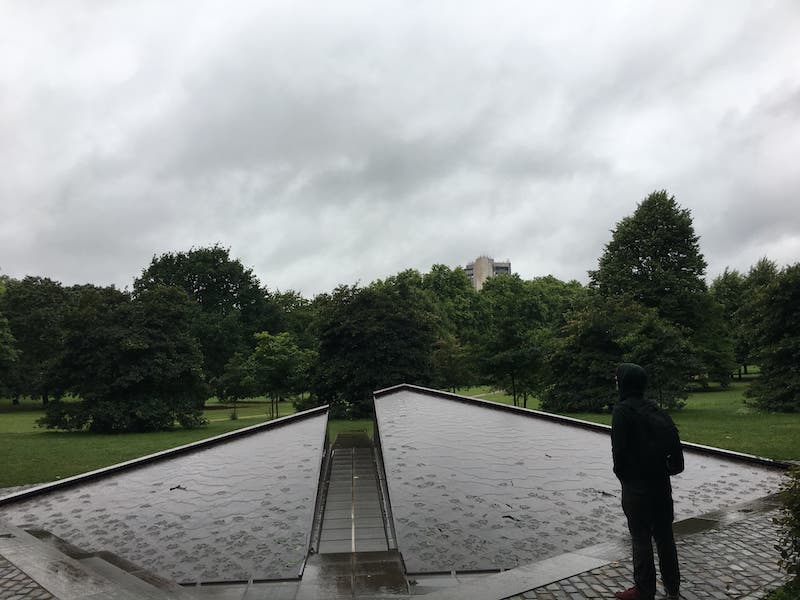
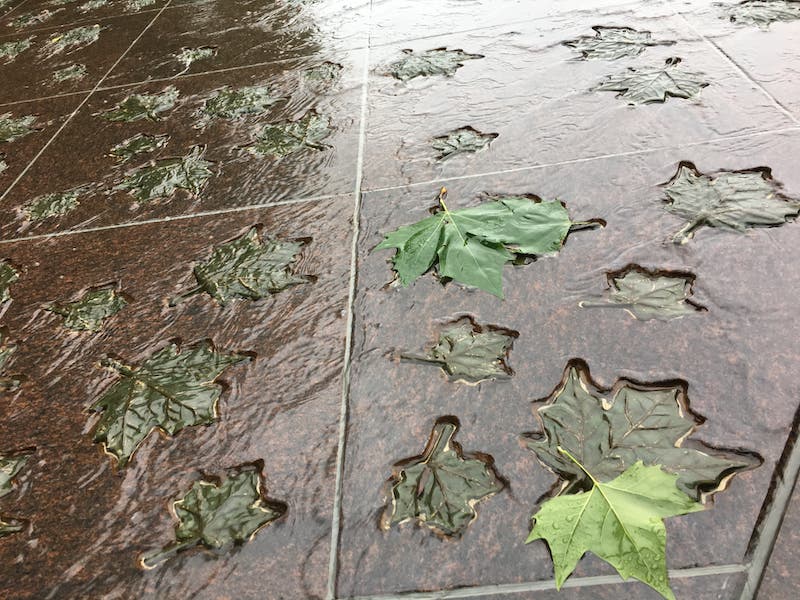
In two world wars one million Canadians came to Britain and joined the fight for freedom. From danger shared, our friendship prospers.
. .
. .
. .
. .
. .
. .
. .
. .
. .
. .
. .
. .
. .
. .
. .
. .
. .
. .
. .
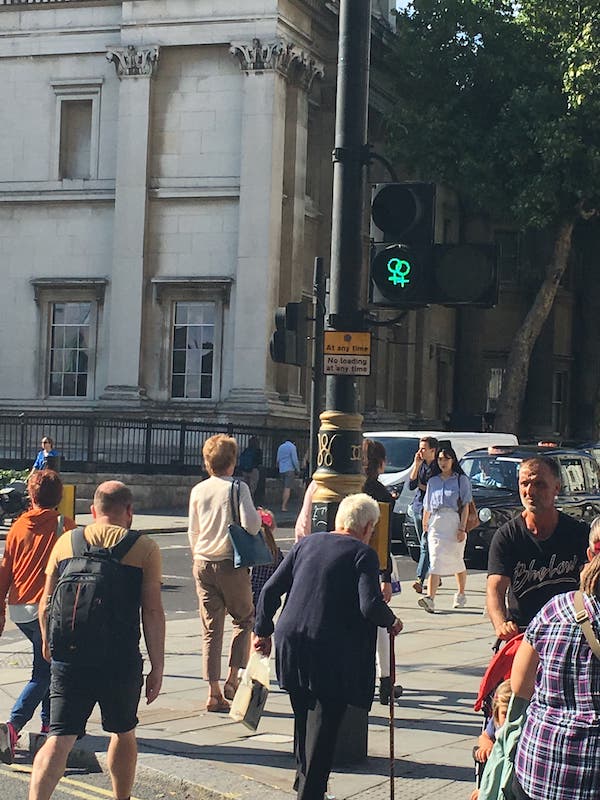
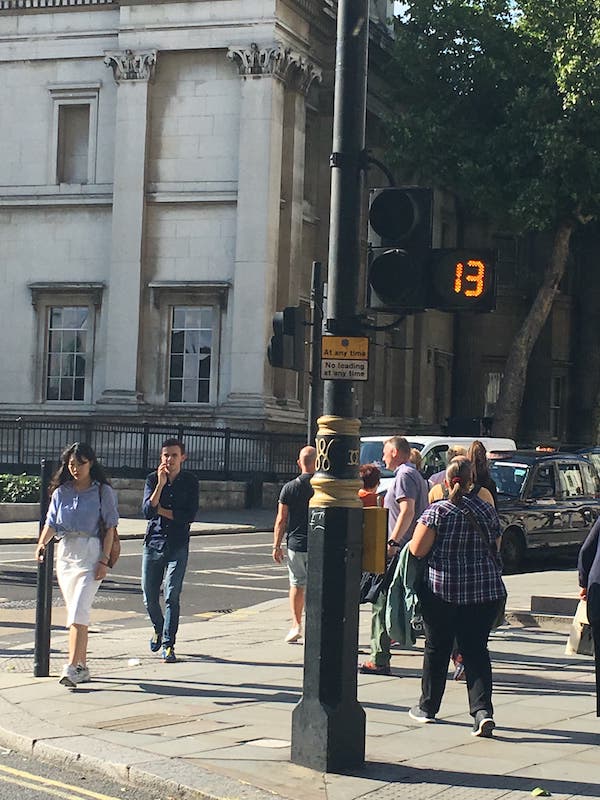
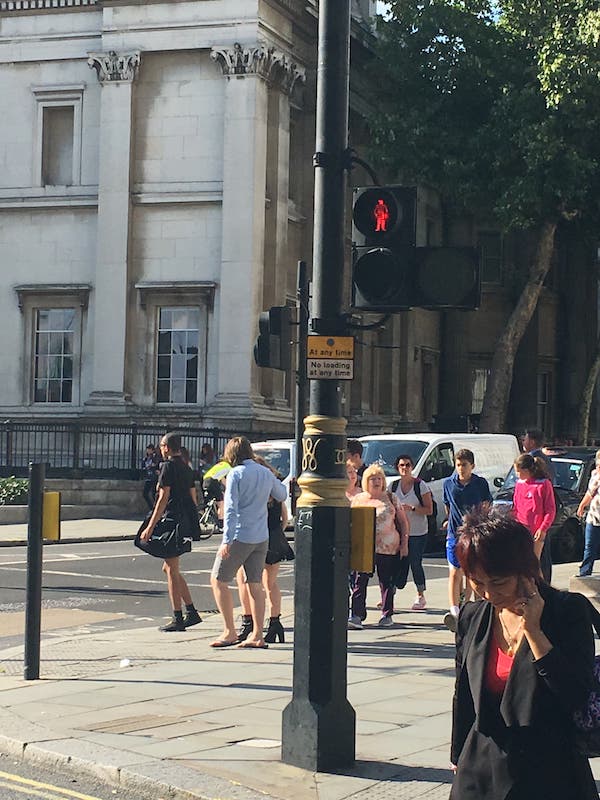
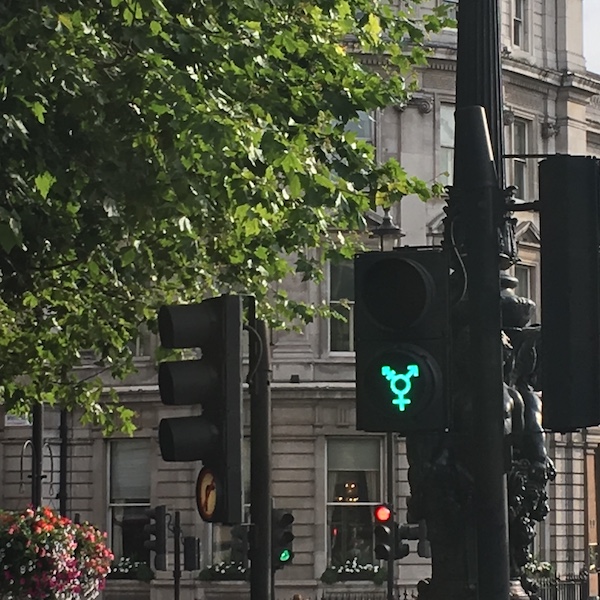
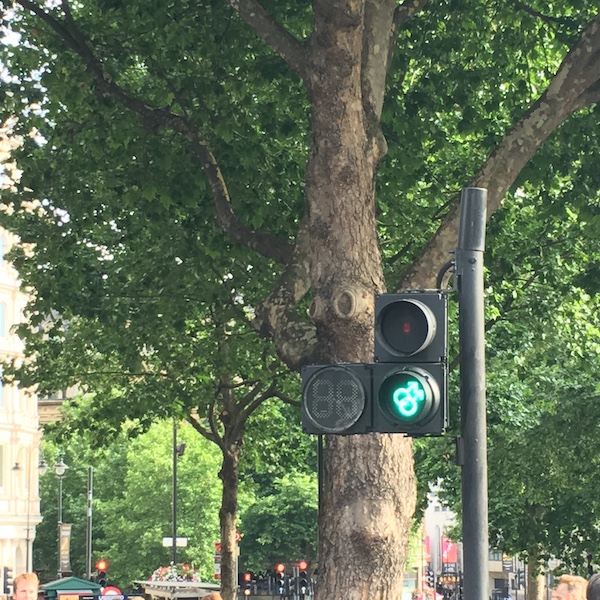
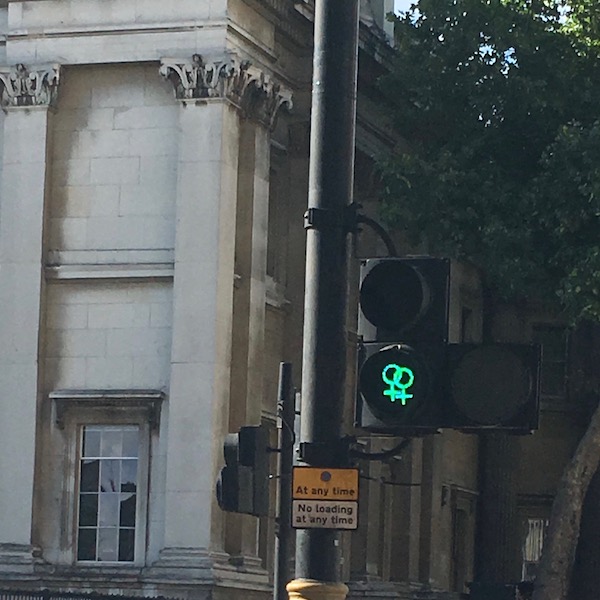
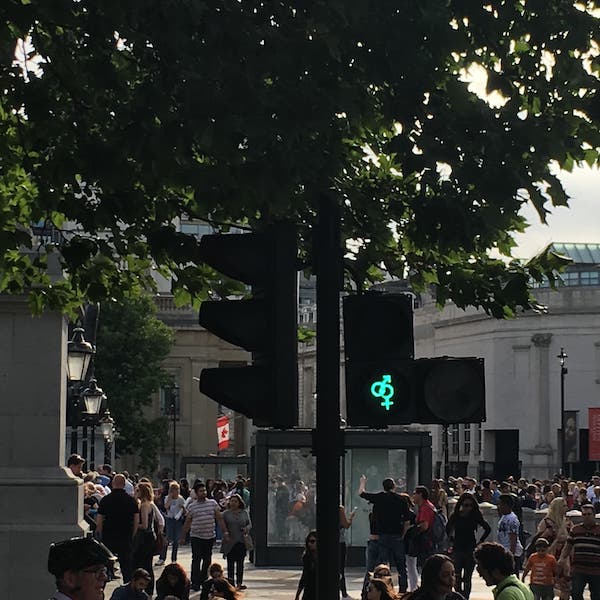
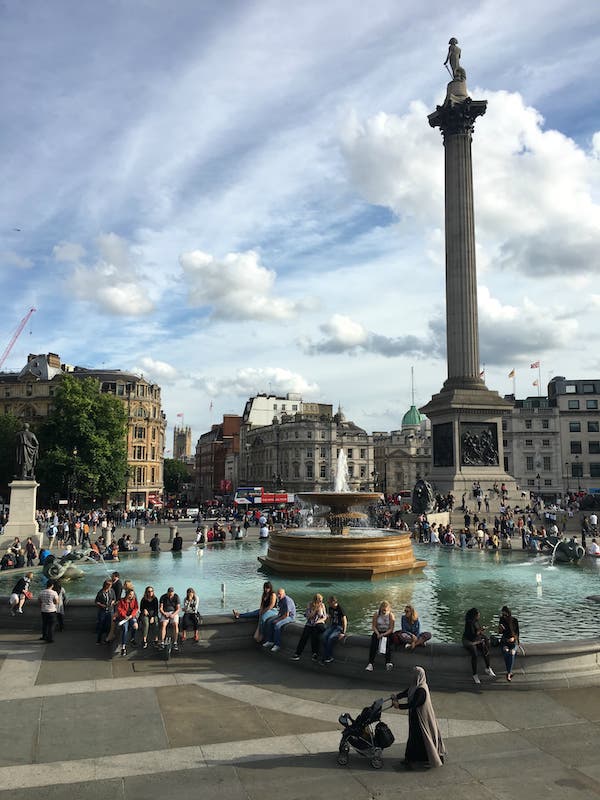
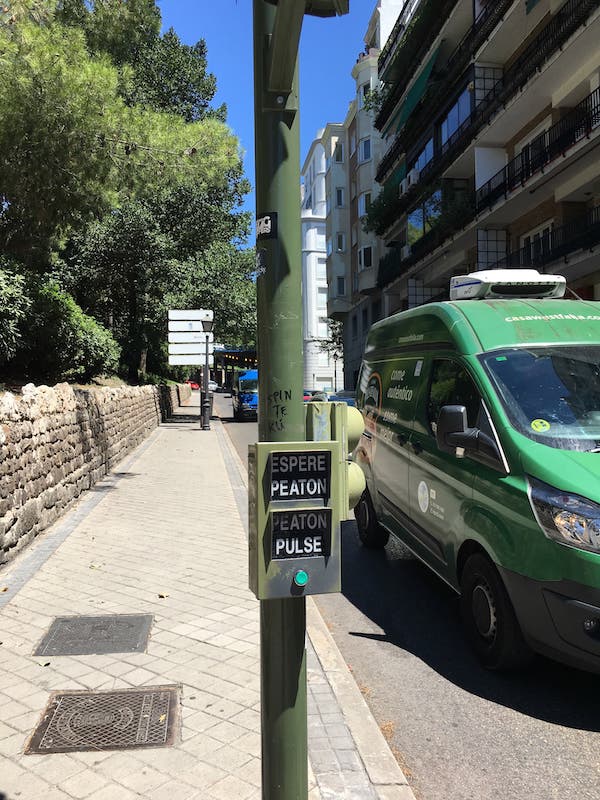
Traffic signs around Trafalgar Square were changed June 2016 leading up to Pride to include gay, lesbian, trans, and straight symbols.
Mr Smith, of Preston, Lancashire, said: “When the light went green I saw the two female symbols and I thought, ‘Oh right, so my missus can cross with my little girl but what do me and the boy do?’” From Gay traffic lights leave pedestrians in Trafalgar Square BAFFLED by David Pilditch
An alternative title for the article “Heterosexuals completely entrenched in gender roles, lack critical thinking skills” was discussed but ultimately deemed “too on the nose”.
. .
. .
. .
. .
. .
. .
. .
. .
. .
. .
. .
. .
. .
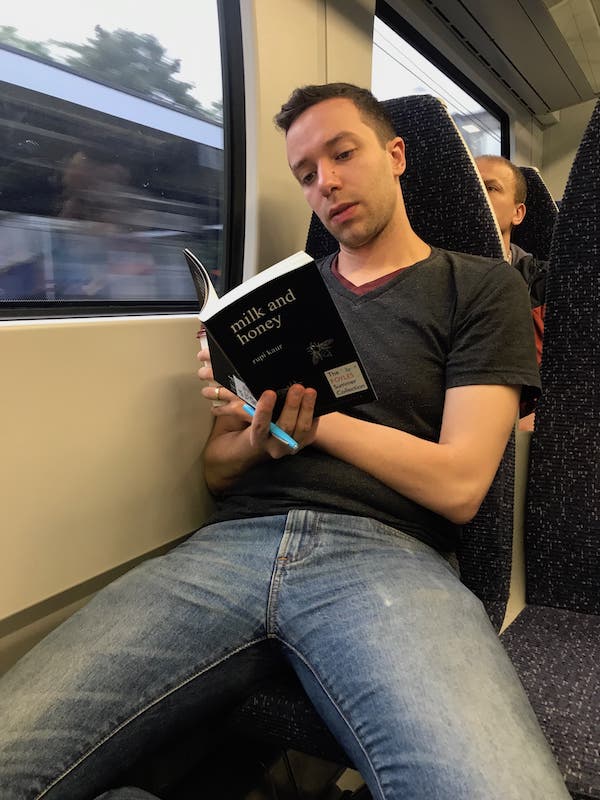
I’m interested in Rupi Kaur’s use of simile and metaphore, always so apt ;;
the night after you left
i woke up so broken
the only place to put the pieces
were the bags under my eyes
From Milk and Honey by Rupi Kaur
Her poems some graft of tweet && aphorism ;;
. .
. .
. .
. .
. .
. .
when my mother says i deserve better
i snap to your defense out of habit
he still loves me i shout
she looks at me with defeated eyes
the way a parent looks at thier child
when they know this is the type of pain
even they can’t fix
and says
it means nothing to me if he loves you
if he can’t do a single wretched thing about it
. .
. .
. .
. .
. .
. .
. .
. .
. .
. .
. .
. .
. .
. .
. .
. .
. .
. .
. .
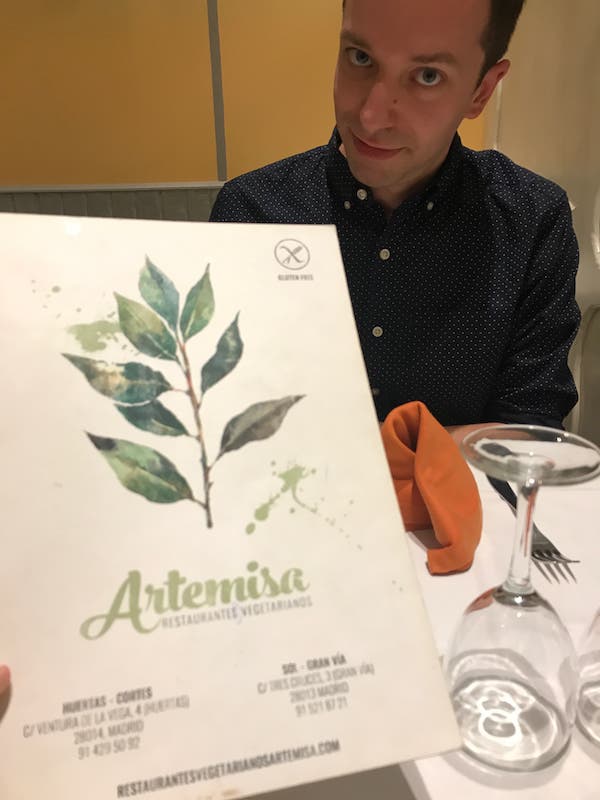
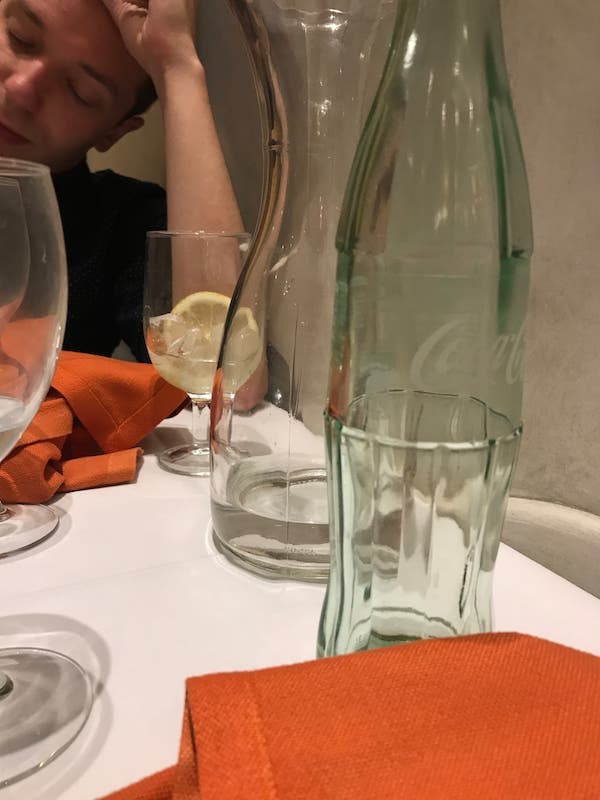
During dinner a man enters the restaurant ;; goes from table to table selling flowers. The server returns from the kitchen with a glass of ice water for him and the welcome offer of a place to sit ;; a moment ;; then he’s back on his way out the door to peddle flowers.
. .
. .
. .
. .
. .
. .
. .
. .
. .
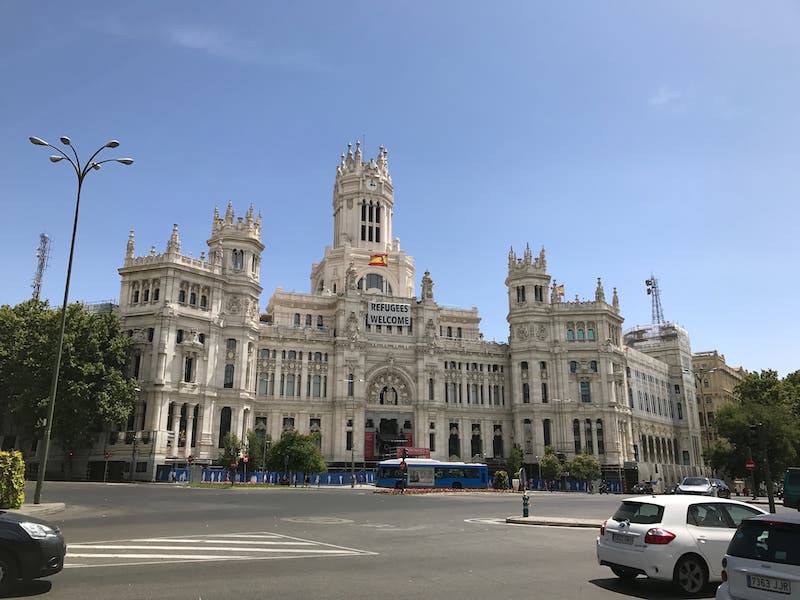
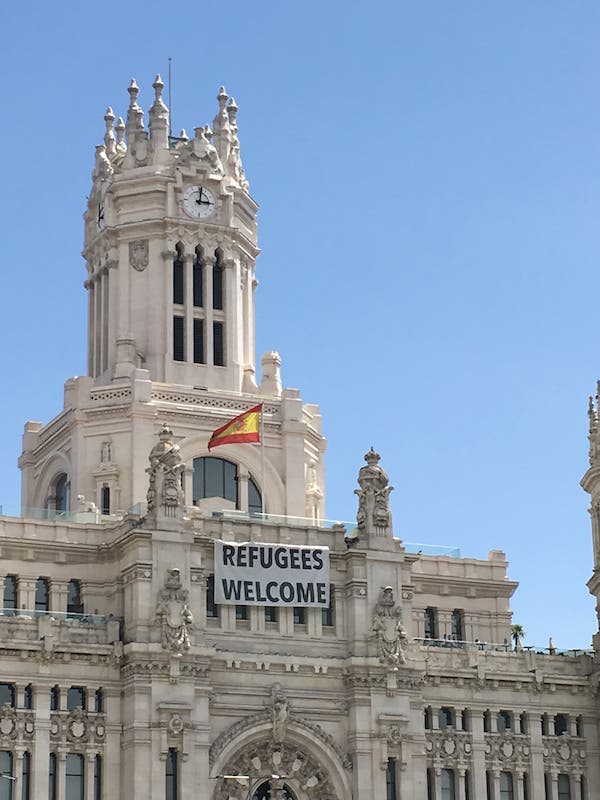
REFUGEES
WELCOME
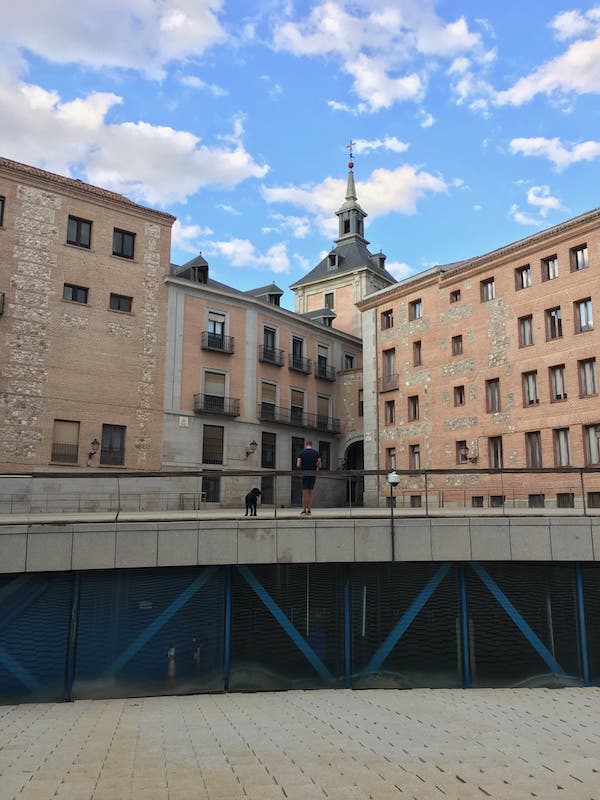
A banner (4m x 8m) on Madrid City Hall in solidarity with asylum seekers has hung since 2015 ;; [x]
. .
. .
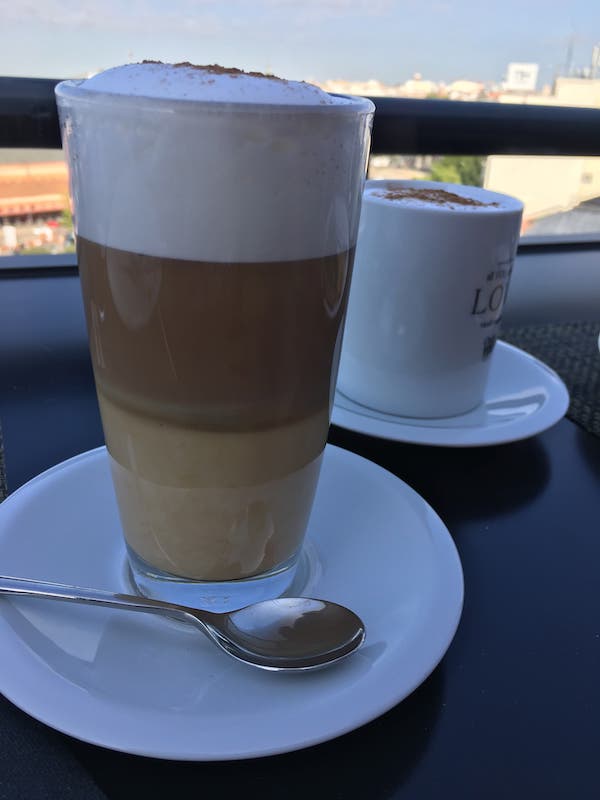

The people of Europe are confused when b asks for vanilla in his latte ;; so he’s had to buckle up, try other ways of masking his coffee’s flavor
. .
. .
. .
. .
. .
. .
Let there be peace, truth, and healing because
there is no half-life of grief when a loved one
dies from radiation poisoning. There is no half-life
of sorrow when our children inherit this toxic legacy,
this genetic and generational aftermath, this fission
of worlds. Let there be just and compassionate
compensation for our entire nuclear family.
Let there be the safe disposal of waste and
the cleaning of abandoned mines. Let there be
the disarmament of the violent nucleus within
nations. Let there be a proliferation of peace.
For our children, let there be stories of creation
and not stories of annihilation. Let there be
a sublime peace that will illuminate
their radiant features.
. .
. .
. .
. .
. .
. .
. .
. .
En un rectángulo blanco y negro tal como se nos aparece la tragedia antigua, Picasso nos envía nuestra esquela. Todo lo que queremos está a punto de morir, y por eso hay que resumir todo lo que queremos, con la intensa emoción de una despedida, en algo tan hermoso que nunca podamos olvidarlo.
In a black and white rectangle that looks like an ancient tragedy, Picasso sends us our death notice. Everything we love is about to die, and that is why everything we love must be summed up, with all the high emotion of farewell, in something so beautiful we shall never forget it.
. .
. .
. .
. .
. .
. .
. .
I am asleep, dreaming a terrible dream, so I awake,
and want to call my father to ask if, just
for a short time, the dog can come to stay with me.
But the light next to my bed won’t light:
I press and press the switch. Touching the phone,
I can’t see to dial the numbers. Can I learn how to keep
the dog in my apartment? In the dark, trying
a second light, I remember
I always knew these machines would fail me.
Then I awake,
remember my father and the dog are dead,
the lights in that room do not go on.
. .
. .
. .
Not the peace of a cease-fire,
not even the vision of the wolf and the lamb,
but rather
as in the heart when the excitement is over
and you can talk only about a great weariness.
I know that I know how to kill,
that makes me an adult.
And my son plays with a toy gun that knows
how to open and close its eyes and say Mama.
A peace
without the big noise of beating swords into ploughshares,
without words, without
the thud of the heavy rubber stamp: let it be
light, floating, like lazy white foam.
A little rest for the wounds—
who speaks of healing?
(And the howl of the orphans is passed from one generation
to the next, as in a relay race:
the baton never falls.)
Let it come
like wildflowers,
suddenly, because the field
must have it: wildpeace.
. .
. .
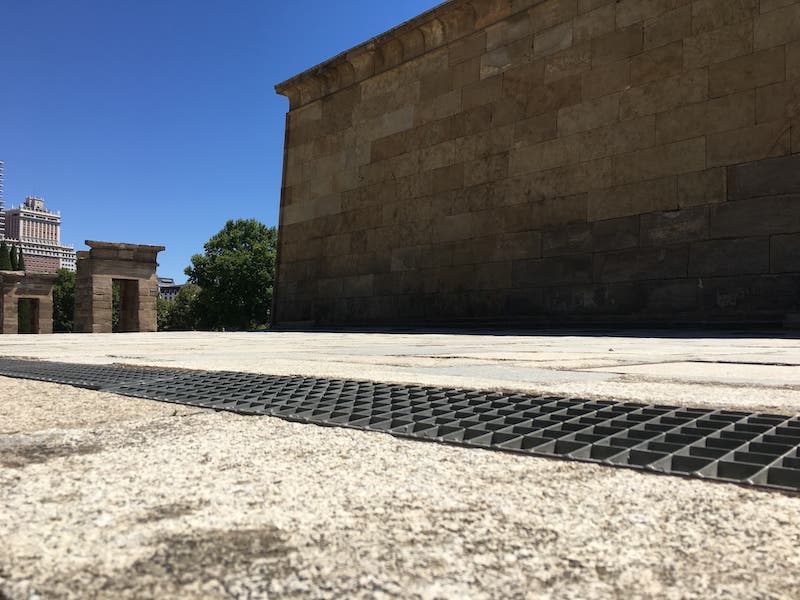
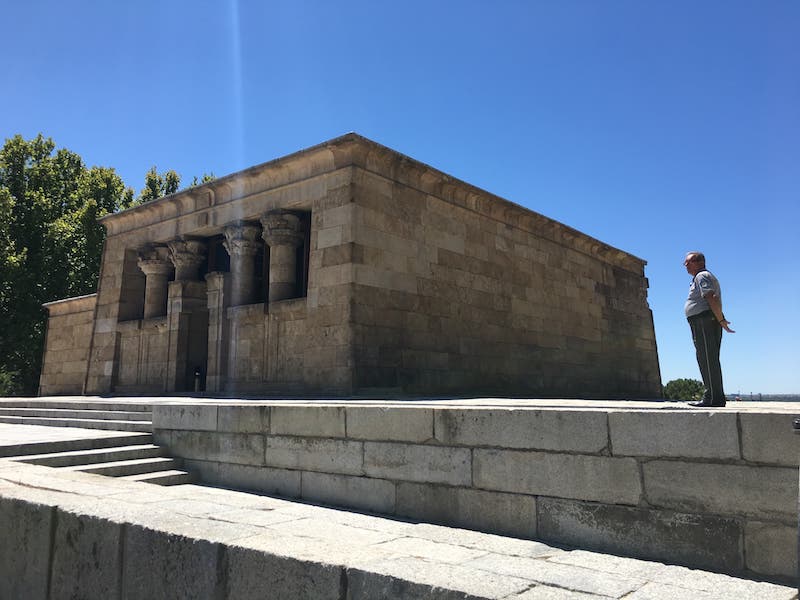
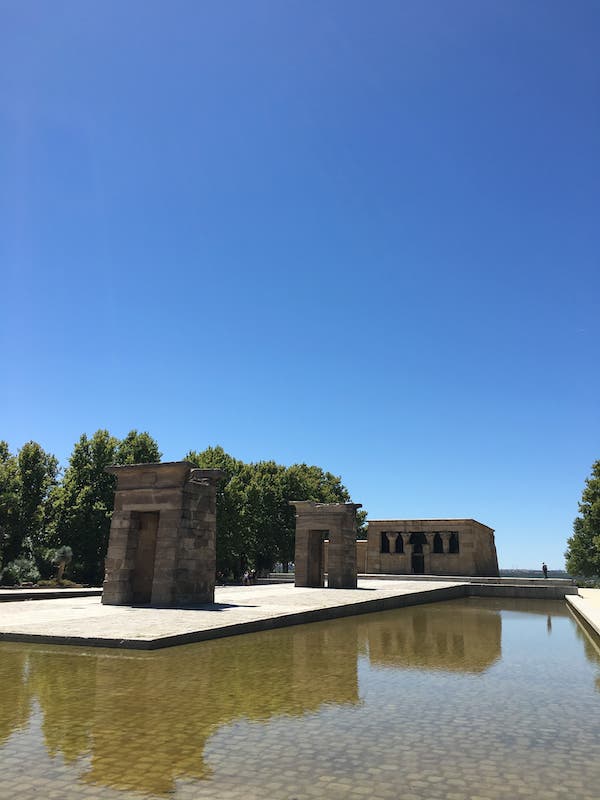
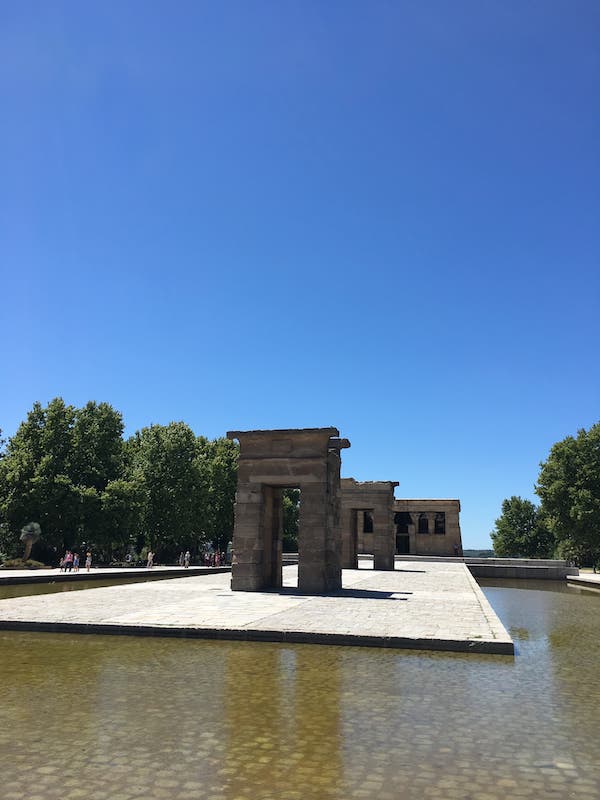
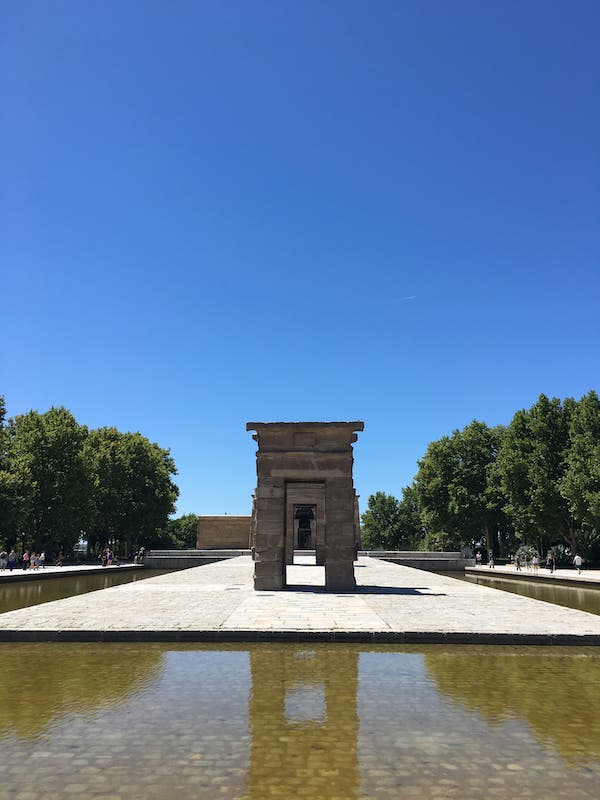
Because everything in Madrid closes in the afternoon between 2 and 5pm – even el Templo de Debod with its outdoor vistas – a single guard keeps the temple safe in the steep afternoon sun.
. .
. .
. .
. .
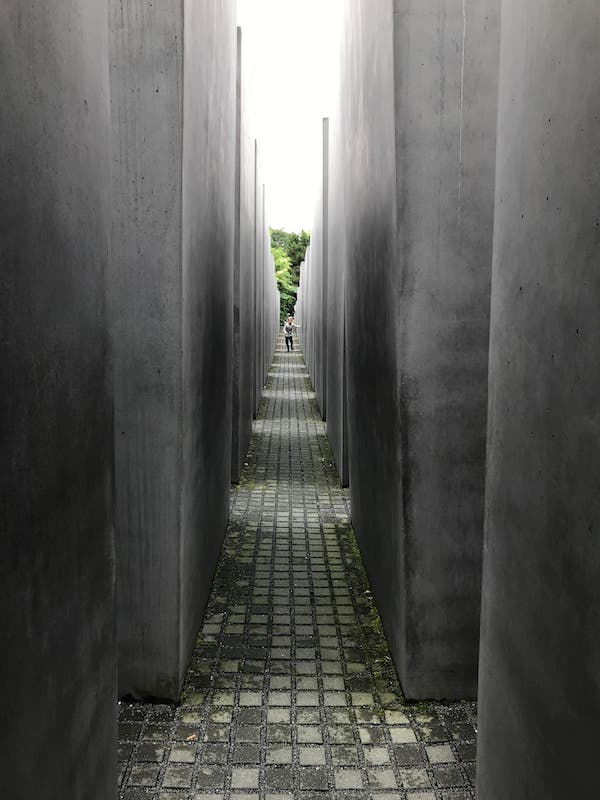
But, upon entering the narrow alleys and plunging between higher and higher slabs, perspectives are sliced to a ribbon, other visitors are cut off from view, and an eerie claustrophobia sets in—even as some visitors (not just kids) play little games of hide-and-seek in the rectilinear maze. From The Inadequacy of Berlin’s “Memorial to the Murdered Jews of Europe” by Richard Brody
. .
In my (admittedly limited) time here, Berlin has felt presented outside of its history. There was often little information easily available for the public to understand the significance of places and monuments – particularly the Memorial for the Murdered Jews of Europe. A friend of mine described Berlin as presenting itself as a city under siege, like all the political and social movements of the 20th Century happened to Berlin without its control or consent, when in reality it has always been at the heart of those in power.
The title [of the Memorial] doesn’t say “Holocaust” or “Shoah”; in other words, it doesn’t say anything about who did the murdering or why—there’s nothing along the lines of “by Germany under Hitler’s regime,” and the vagueness is disturbing. Of course, the information is familiar, and few visitors would be unaware of it, but the assumption of this familiarity—the failure to mention it at the country’s main memorial for the Jews killed in the Holocaust—separates the victims from their killers and leaches the moral element from the historical event, shunting it to the category of a natural catastrophe. The reduction of responsibility to an embarrassing, tacit fact that “everybody knows” is the first step on the road to forgetting. From The Inadequacy of Berlin’s “Memorial to the Murdered Jews of Europe” by Richard Brody
I’ve been thinking these past few days about a democratic society’s Responsibility of Speech ;; the imperative that heads of state have to address times of tragedy and violence, that a group of people have to reckon publicly with their history. In discussions about Confederate monuments here in the US, it’s often said that there are no monuments to Hitler in Germany – and there shouldn’t be. But the Memorial to the Murdered Jews of Europe doesn’t call its audience into the moral implications of its title – and it must.
. .
. .
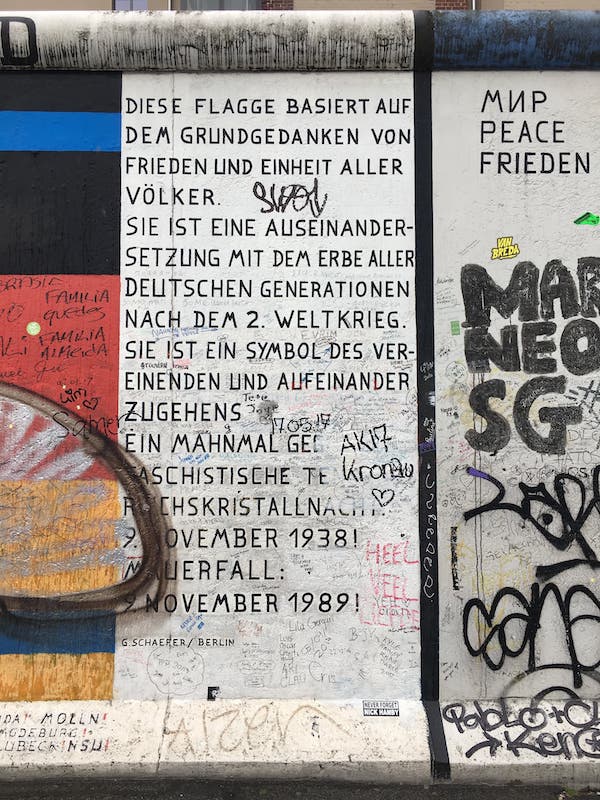
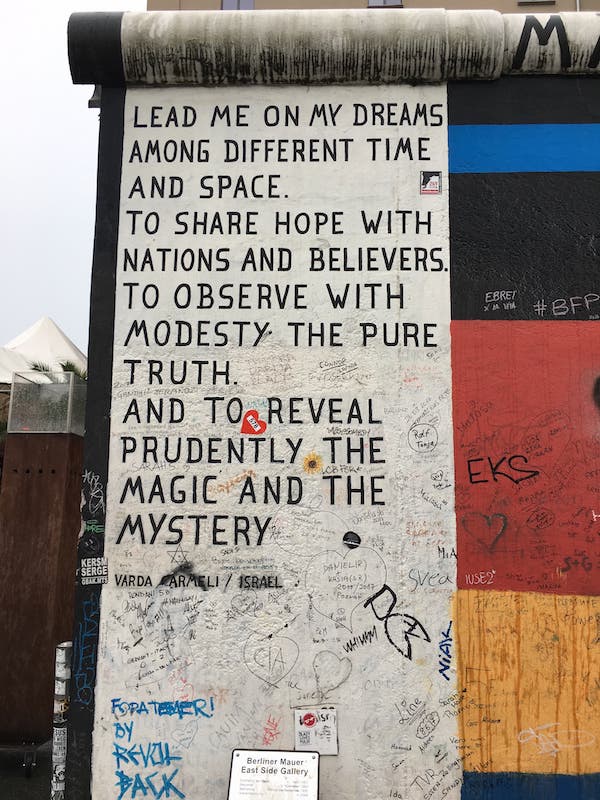
This flag is based on the basic idea of peace and unity of all peoples. It is an exploration of the heritage of all German generations after the Second World War. It is a symbol of unifying and converging. A memorial… (translated from German)
. .
. .
. .
. .
. .
. .
. .
. .
. .
. .
. .
. .
. .
. .
. .
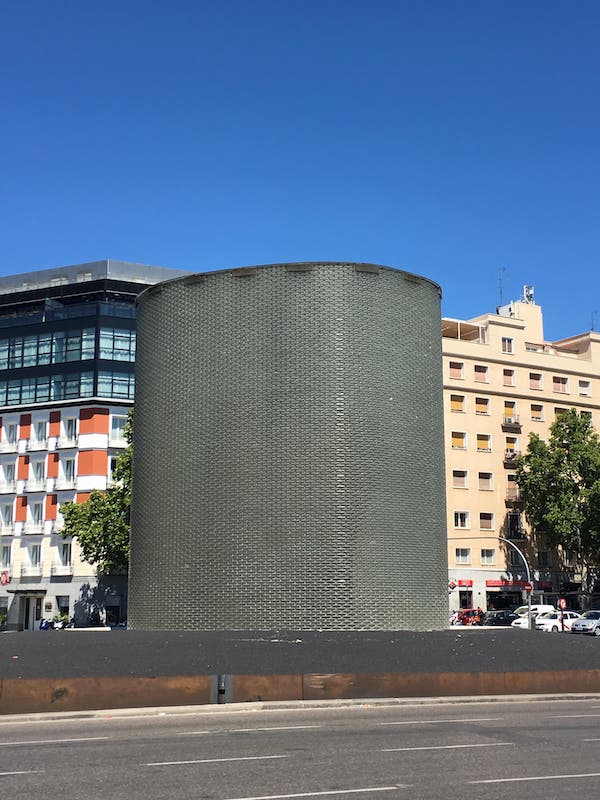
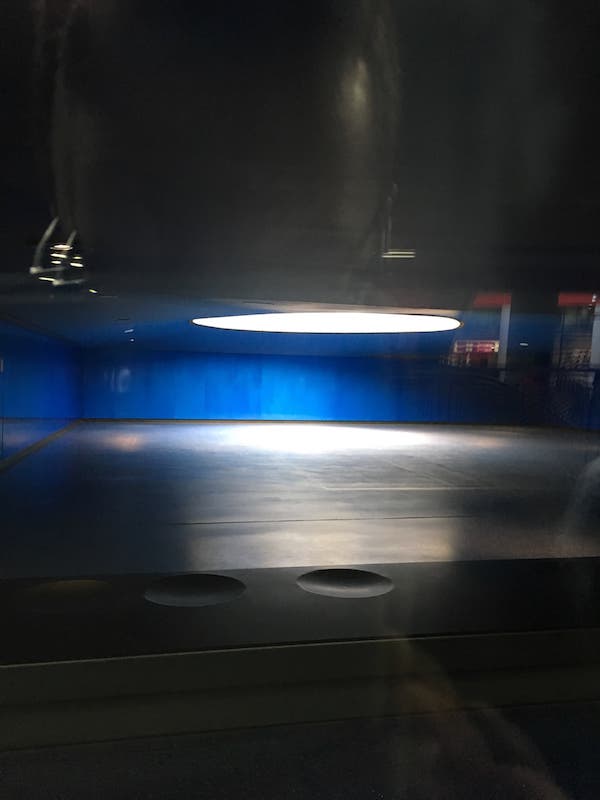
The memorial at Atocha Station for the victims of the 11 March 2004 bombing rises inconspicuously in the middle of the road above the station ;; light filters down below through the column and through the words of hundreds messages of grief sent in the wake of the attack ;; when the memorial space is closed it can only be viewed through glass distorted like water like a city sunk down in grief ;;
. .
. .
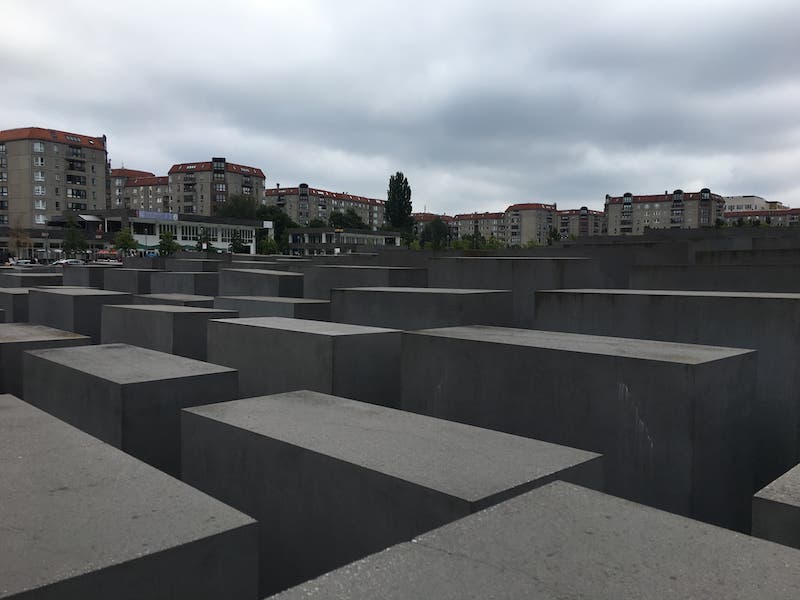
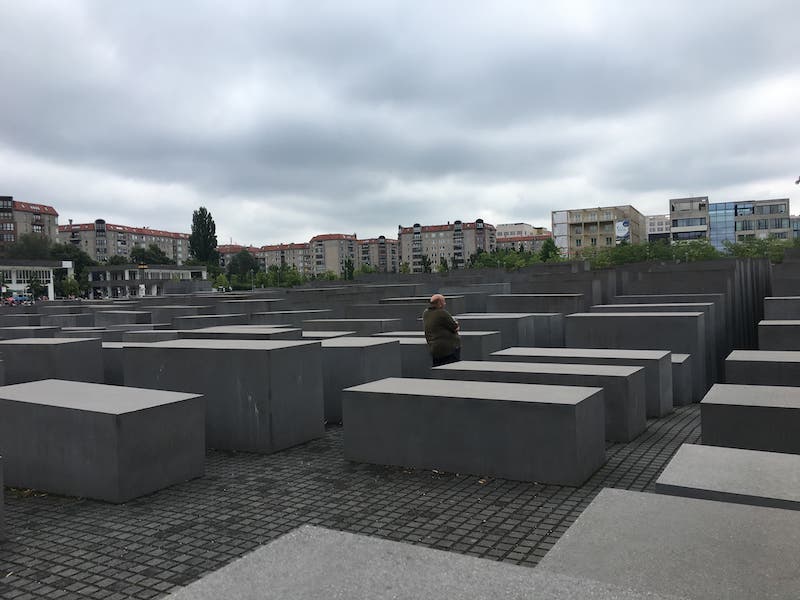
Without that title, it would be impossible to know what the structure is meant to commemorate; there’s nothing about these concrete slabs that signifies any of the words of the title, except, perhaps, “memorial”—insofar as some of them, depending on their height, may resemble either headstones or sarcophagi. So it’s something to do with death. And as for the title itself—which murdered Jews? When? Where? From The Inadequacy of Berlin’s “Memorial to the Murdered Jews of Europe” by Richard Brody
. .
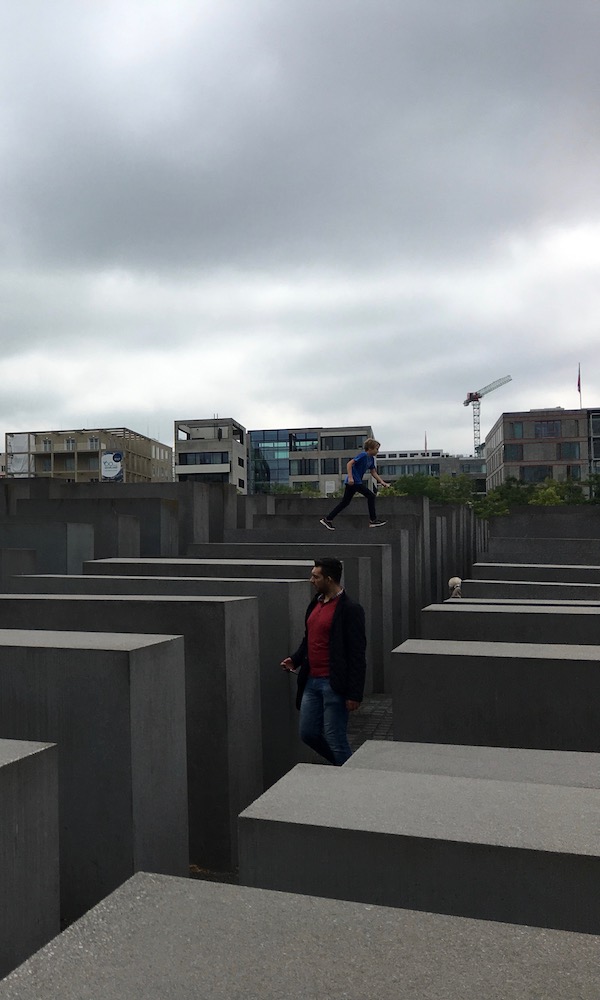
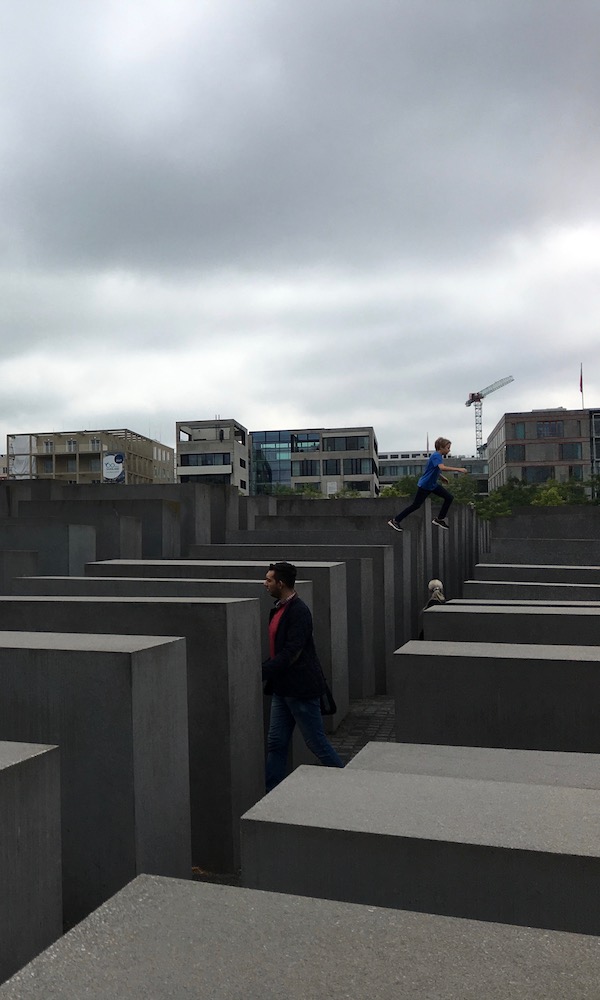
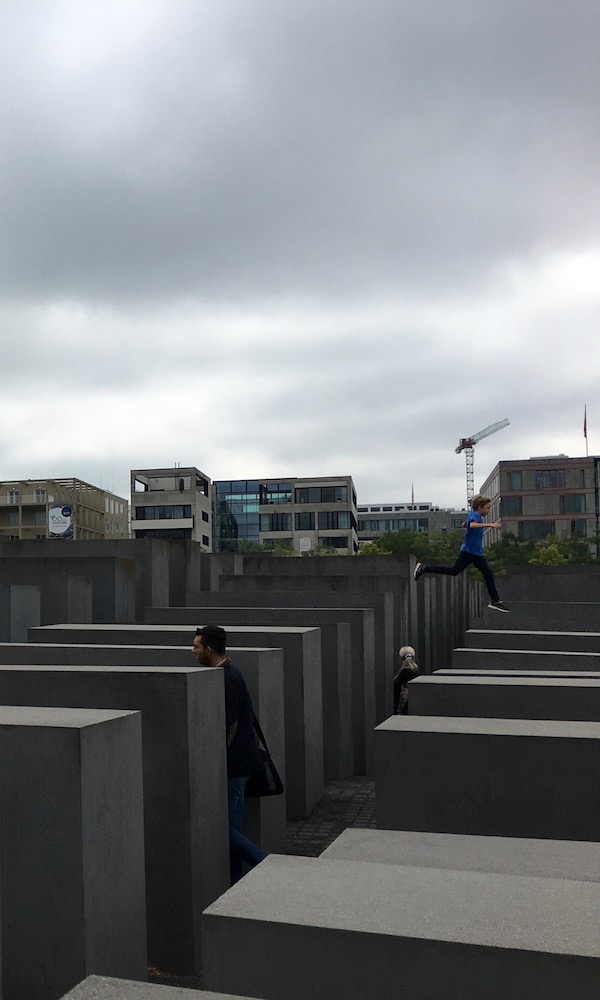
The thing is – children (and adults) playing in the memorial are interacting with the space in a way that makes perfect sense for its design. Here are four acres of maze with paths like rolling hills and concrete slabs spaced a jump’s width apart. This is a failure of design, not of the public ;;
. .
. .
. .
. .
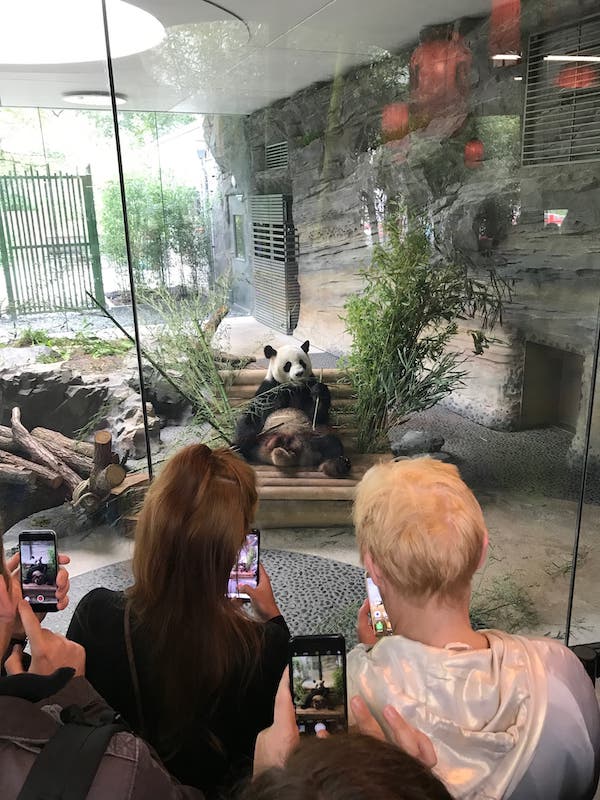

Every few minutes a guard pushes the crowd on, giving room for the next group to flow in ;; Jiao Qing keeps munching through it all
. .
. .
. .
. .
. .